Advice & Support

Buying Diamonds: Your Guide To The 4 C’s – What To Look For

The 4 C’s identify the key elements to consider when purchasing or investing in a diamond. Each ‘C’ plays a significant relevance regarding the quality and the price of the diamond.

At Kensington Jewellery we have partnered with a number of key diamond suppliers to ensure we are able to source a diamond for every customers requirement.

We source diamonds in a variety of sizes from 15pts to 4 Carats in a range of colours and clarity.

All are GIA certified – the leading diamond certification agency in the world.
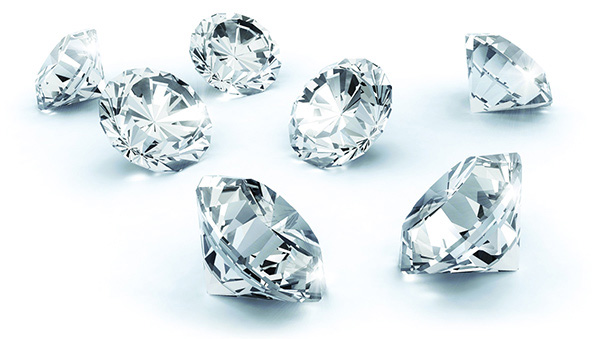
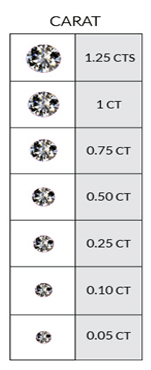
Diamond weight is stated in carats, with one carat equalling 1/5th if a gram.

Less than 5% of gem quality diamonds are one carat or above.

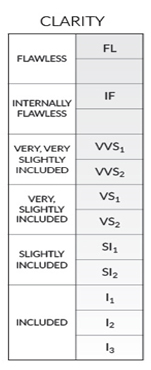
Diamonds are formed under tremendous heat and pressure and, as a result of this process, internal and external characteristics which affect the clarity of diamonds are common.  

Internal characteristics are called inclusions, external characteristics are known as blemishes.

These characteristics are used by gemmologists to grade the clarity of diamonds and the GIA (Gemological Institute of America) provides a scale of 11 grades ranging from “flawless” to “included”

Most people think that diamonds are colourless, but in fact most diamonds used in jewellery have slight tints of yellow or brown.

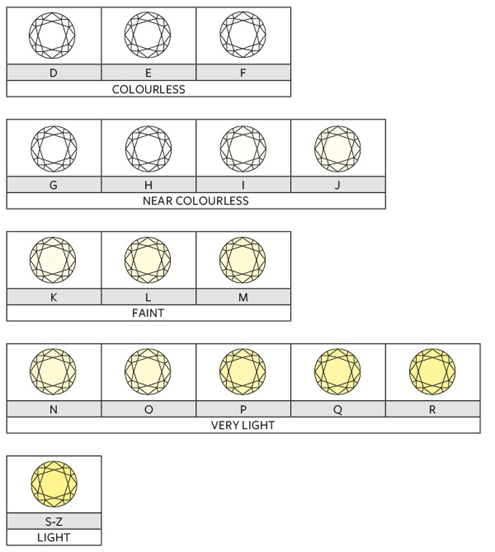
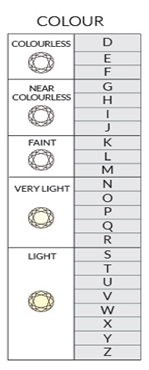
All diamond colours are graded by a letter of the Alphabet, totally colourless and rare “fancy coloured” diamonds (blue, pink, orange, green, yellow or brown) are the most valuable.  All other diamonds are graded according to how noticeable the colour is.

The GIA Colour Scale begins with the letter D (colourless) and continues through to Z (light yellow).  A master set of diamonds is used by gemmologists to compare colours.

This is the one characteristic of a diamond where man has more influence than nature. A diamond’s beauty depends on how light strikes its surface, how much enters the diamond and in what form it returns to the eye.

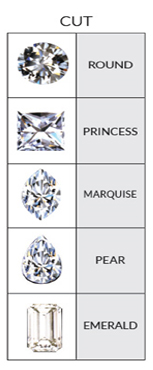
The GIA Diamond Cut Grading System assesses a diamond’s overall face up appearance using sophisticated computer modelling to predict brightness, fire and scintillation together with other features such as weight ratio, durability, polish and symmetry. The round brilliant diamond is the most popular cut but shapes vary depending on the stone and the skill of the cutter.

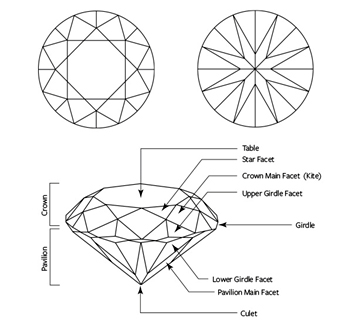
Round Brilliant Cut

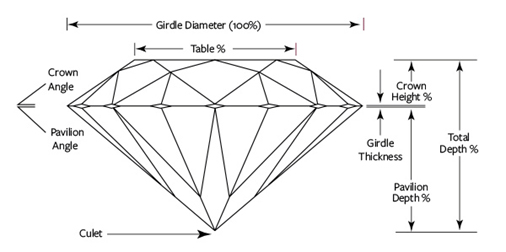
Properties of a Round Brilliant Cut

Round Brilliant Cut – The Ideal Cut

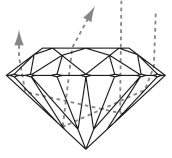
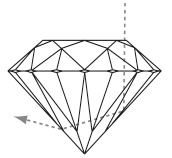
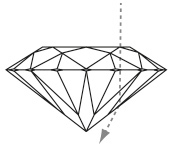
A diamond’s brilliance is controlled by the quality of its cut

Ideal Cut

An ideal cut diamond allows the light to reflect through the table and crown giving the diamond fire, brilliance and plenty of sparkle.

Deep Cut

A deep cut diamond means that the light escapes from the bottom causing the diamond to appear dull and lifeless.

Shallow Cut

A shallow cut diamond results in light escaping from the sides causing the diamond to lose brilliance.

  • GIA CUT GRADE
  • Excellent
  • Very Good
  • Good
  • Fair
  • Poor

The Cut Grade is the GIA Cut Grading System which assigns one of five grades to describe the overall cut quality of a round brilliant diamond.

When applying a cut grade to a diamond, several proportions and diamond appearances have to be taken into consideration before coming to a conclusion. The gemmologists consider the symmetry, polish and culet in order to determine the final cut grade.

The GIA Cut Grading System allows the public and the diamond industry to use cut along with colour, clarity and carat weight when assessing or purchasing a round brilliant diamond.

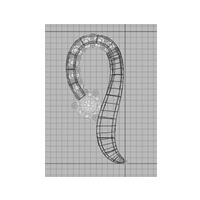
Handmade CAD Design Process

At Kensington Jewellery we pride ourselves on being a UK based Jewellery manufacturer.

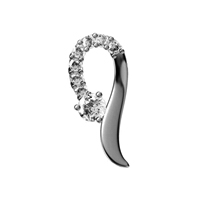
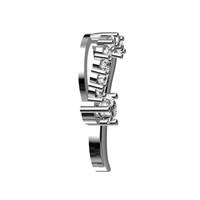
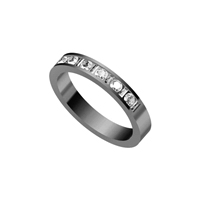
Our unique designs are bespoke to us and endure an intense design process starting right from the concept/ idea stage, to CAD design, to wax moulding and in to production, all complete with stringent quality checks to ensure our customers the perfect product.

We have thousands of designs to choose from, however if you still can’t find what you are looking for we also offer a full bespoke design service to create and accommodate for all customer specific requirements.

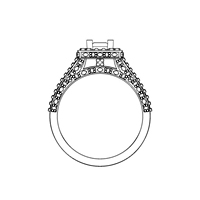
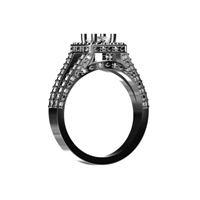
Please find below some examples of bespoke designs created with CAD.

4 C’s Summary

Design by eSterling

Diamond Quote